
Introduction to Cambridge University Press
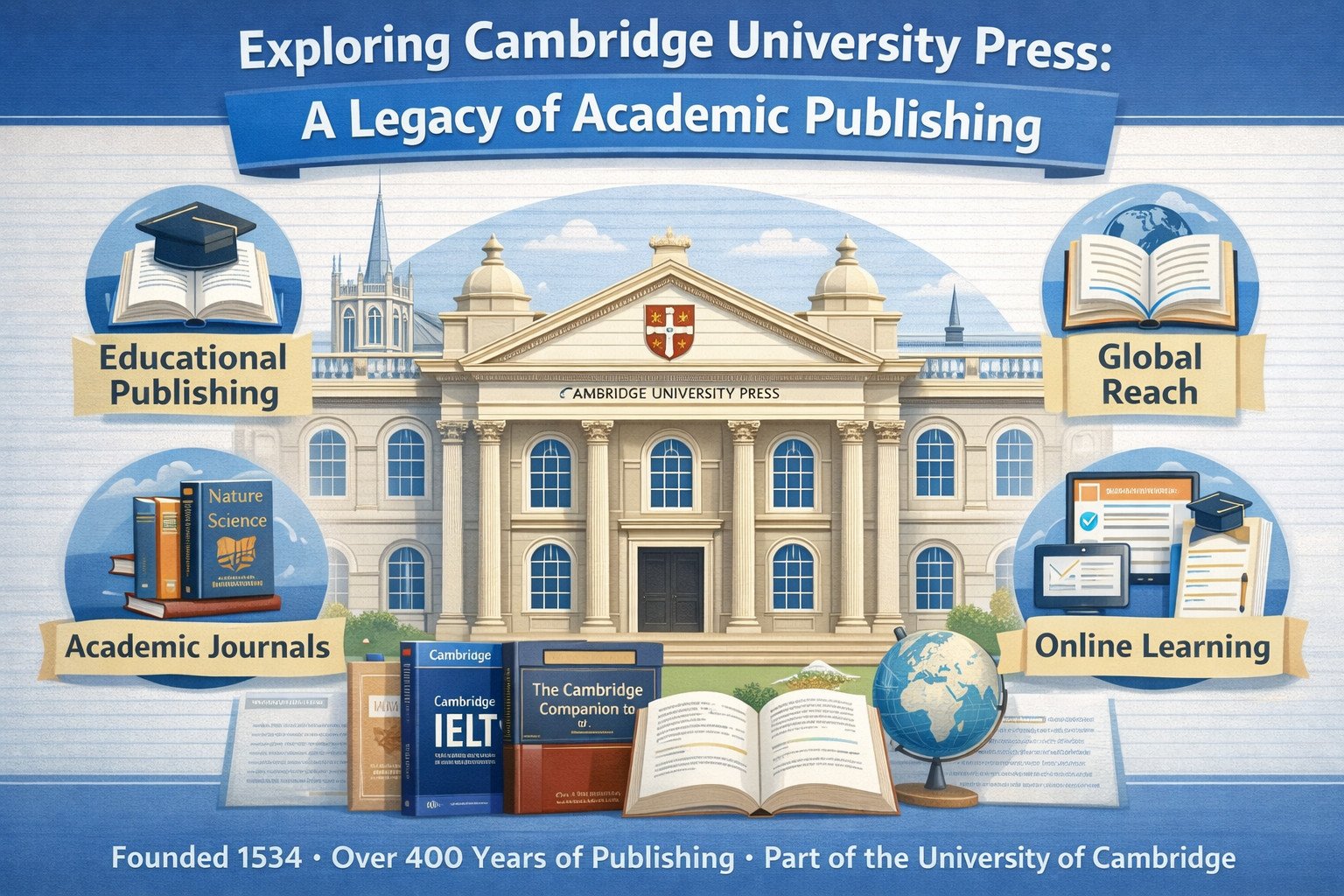
Founded in 1534, Cambridge University Press holds the distinguished title of the oldest publishing company in the world. As a pivotal entity within the framework of higher education and academic publishing, it has remained at the forefront of scholarly communications for nearly five centuries. Its long-standing history is a testament to its commitment to disseminating academic knowledge and advancing education globally.
Cambridge University Press originated from the ambition of the University of Cambridge to publish and distribute academic work, demonstrating a forward-thinking approach to education. Throughout its extensive history, the Press has played an integral role in the evolving landscape of academic publishing. Today, it is celebrated not only for its significant contributions to scholarly books but also for its impactful journals that cover an array of disciplines, from the humanities to social sciences and the natural sciences.
The mission of Cambridge University Press is centered around the advancement of learning and knowledge across borders. By prioritizing the needs of researchers, educators, and students, the Press embraces a global perspective, ensuring that it contributes to the advancement of knowledge in diverse cultures and contexts. This relentless pursuit of excellence in publishing is exemplified through its robust catalog of peer-reviewed publications that are relied upon by scholars and institutions worldwide.
In the context of contemporary academic publishing, Cambridge University Press has also adapted to technological advancements. By embracing digital formats and open access initiatives, the Press ensures that scholarly information is more accessible than ever before. This approach not only reflects the current trends in academia but also aligns with its foundational ethos of promoting education and knowledge for all. Thus, Cambridge University Press continues to be a significant player in the academic publishing landscape, blending its historic roots with modern innovations.
Historical Milestones in Publishing
Established in 1534, Cambridge University Press is the world’s oldest publisher, marking significant milestones in the realm of academic publishing. The Press has undergone tremendous changes over the centuries, continually adapting to meet the evolving needs of the academic community. One of its early essential contributions came with the publication of its first book, a Latin text entitled “Regulae Juris” in 1584, showcasing the Press’s commitment to advancing scholarship through printed material.
Throughout the 17th and 18th centuries, the Press became renowned for its distinct contributions in various fields. The publication of Sir Isaac Newton’s “Philosophiæ Naturalis Principia Mathematica” in 1687 is a pivotal moment in both the history of Cambridge University Press and the scientific revolution. This work not only solidified the Press’s reputation but also cemented its role in disseminating scientific knowledge, which remains relevant to this day.
As the 19th century unfolded, Cambridge University Press embraced innovative technologies that transformed the publishing landscape. The introduction of steam-powered printing in the early 1800s enabled faster production of materials, allowing the Press to expand its catalog significantly. Additionally, the establishment of the Press’s first international office in the United States further exemplified its commitment to becoming a global academic leader.
Entering the 20th century, the Press continued to thrive by publishing an array of prominent academic journals and books that addressed the evolving needs of researchers and scholars globally. Notably, during this time, the collaboration with various scholarly associations and the adoption of digital technologies marked another turning point, broadening access to critical literature and expanding the global reach of its publications. This legacy of continual adaptation showcases how Cambridge University Press has maintained its esteemed position in the world of academia through centuries of transformative change.
Areas of Specialization and Services
Cambridge University Press is renowned for its comprehensive academic publishing portfolio that spans various fields of study. Its specialization encompasses a broad spectrum of disciplines, ensuring that scholars and researchers have access to high-quality resources across multiple domains. Among these areas, the humanities play a significant role, where the press publishes extensively on cultural studies, history, literature, and philosophy. These contributions not only advance academic dialogue but also enrich public understanding of complex human experiences.
The social sciences form another cornerstone of Cambridge University Press’s offerings. The press provides critical research and literature in areas such as sociology, political science, psychology, and economics, catering to the needs of an academic audience that seeks to explore societal structures and behavior. Furthermore, the integration of interdisciplinary approaches within social sciences enhances the depth of analysis and promotes innovative thinking.
In addition to its humanities and social sciences publications, Cambridge University Press is recognized for its contributions to STEM (Science, Technology, Engineering, and Mathematics) fields. The press publishes an extensive array of scientific journals, textbooks, and reference works that support the teaching and research activities of scholars around the globe. A notable aspect of its STEM offerings includes support for emerging technologies and methodologies that influence contemporary scientific research.
👉 Join Our Telegram Channel to Download the Cambridge IELTS 20 Academic PDF and Audios
🎧 Includes all Listening Audios + Speaking Videos + Answer Explanations + Writing Samples.
Beyond traditional publishing, Cambridge University Press also embraces modern trends such as open access publishing, allowing for wider dissemination of knowledge and research. Their commitment to offering diverse formats, including ebooks and digital resources, further enhances accessibility, ensuring that information can reach a global audience of learners, educators, and researchers.
Impact on Academic Research and Education
Cambridge University Press has played a pivotal role in the evolution of academic research and education on a global scale. Established in 1534, the Press has consistently produced a rich array of scholarly works that have significantly contributed to various fields of knowledge including humanities, social sciences, and the sciences. The publications that emerge from Cambridge University Press are renowned for their rigor, quality, and intellectual depth. These attributes have established the Press as a trusted source among researchers, educators, and students alike.
One of the most prominent impacts of Cambridge University Press is its involvement in the dissemination of peer-reviewed research. By providing a platform for researchers to share their findings, the Press promotes an environment where knowledge can be freely exchanged and built upon. This has not only facilitated advancements in academic scholarship but also nurtured interdisciplinary collaboration, allowing for comprehensive explorations of complex issues. As researchers draw on the diverse array of texts published by Cambridge, they enrich their work and contribute to the further development of their respective fields.
Furthermore, Cambridge University Press is committed to enhancing educational practices through its publications. Textbooks, journals, and academic resources published by the Press are extensively utilized in classrooms around the world. They provide educators with essential materials that align with curriculum standards, thereby improving the overall quality of teaching and learning. The Press’s dedication to making academic materials accessible has also extended into digital initiatives, ensuring that a wealth of resources is available online to accommodate the needs of diverse learners.
Through these efforts, Cambridge University Press has solidified its reputation as a leader in academic publishing and continues to impact educational landscape and research methodologies, fostering a legacy of informed dialogue and knowledge advancement.
Innovations in Digital Publishing
Cambridge University Press has long been at the forefront of academic publishing, and its commitment to innovation in the digital realm has fundamentally transformed the accessibility and dissemination of knowledge. One of the significant advancements made by the Press includes the introduction of electronic books (e-books), which have provided a flexible and portable alternative to traditional print formats. E-books not only allow users to carry a library of resources at their fingertips but also facilitate interactive learning experiences through embedded multimedia elements.
In addition to e-books, Cambridge University Press has developed robust online journal platforms that cater to the growing demand for research dissemination in an increasingly interconnected world. These platforms have streamlined the submission and peer-review processes, making it easier for researchers to share their findings quickly with the global academic community. The incorporation of open access options has further broadened the reach of these journals, ensuring that vital research is available to a wider audience without financial barriers.
The utilization of technology has also played a critical role in enhancing learning and accessibility in academic publishing. Cambridge University Press actively employs learning analytics and personalized content recommendations to optimize the user experience for students and educators alike. By harnessing data insights, the Press is able to tailor resources and learning materials to better meet the needs of diverse learners, thereby promoting engagement and retention. Furthermore, the integration of accessibility features ensures that individuals with disabilities can fully engage with the content, affirming Cambridge’s dedication to inclusivity in education.
As the digital landscape continues to evolve, Cambridge University Press remains committed to pioneering innovations that not only enrich the educational experience but also uphold the integrity of scholarly communication. This enduring legacy in digital publishing exemplifies the Press’s proactive approach to supporting researchers, educators, and learners worldwide.
Contributions to Open Access Initiatives
Cambridge University Press has been a significant player in the transformation of scholarly communication through its robust commitment to open access publishing. Open access refers to the practice of providing unrestricted access to research outputs such as journal articles, books, and datasets, thereby promoting a more equitable distribution of knowledge. The principles of open access are rooted in the belief that research funded by public or private institutions should be freely available to the public, fostering collaboration and innovation across disciplines.
The importance of open access cannot be overstated, as it democratizes access to information, especially in low-resource settings where subscription fees may be prohibitive. By enabling wider dissemination of research findings, open access contributes to the acceleration of discoveries and advancements in various fields. Cambridge University Press recognizes the vital role it plays in facilitating this movement, thus ensuring that academic research reaches individuals and institutions that would otherwise be unable to consult such materials.
Cambridge University Press has pioneered initiatives to lead in the open access domain, launching several programs that align with its mission to advance knowledge through innovation. The establishment of Cambridge Open Engage, for instance, serves as an interactive platform for researchers to share and collaborate on their work prior to formal peer review, fostering early engagement with the scholarly community. Additionally, the press has made significant strides by transitioning numerous titles to open access, allowing authors to opt for open access publication while maintaining the integrity and rigor of the peer-review process.
Through these initiatives, Cambridge University Press is not just participating in the open access movement but is actively shaping its future. By demonstrating leadership in providing high-quality open access options, the press enhances global scholarly communication and addresses the pressing need for equitable access to research outputs in an increasingly interconnected world.
Collaborations and Partnerships
Cambridge University Press has a storied history of forging collaborations and partnerships with a multitude of academic institutions, libraries, and various organizations. These relationships are pivotal not only for the Press’s own growth but also for fostering a spirit of academic inquiry and sharing knowledge across disciplines and geographic boundaries. By collaborating with universities and colleges, Cambridge can more effectively publish works that resonate with the latest scholarly efforts, ensuring content remains relevant and impactful.
One significant area of collaboration involves the establishment of joint ventures with other academic publishers and educational organizations. These partnerships allow Cambridge to combine resources and expertise, resulting in enhanced publishing solutions and improved access to scholarly content. Given the evolving landscape of academic publishing, cooperative initiatives have proven beneficial in addressing the challenges posed by digital transformation, providing authors with streamlined pathways to publication.
Furthermore, Cambridge University Press maintains robust partnerships with libraries and academic institutions, which play a critical role in enhancing accessibility and dissemination of research. By developing digital platforms that host a wide array of academic materials, these partnerships enable libraries to offer their patrons access to a rich repository of knowledge curated by Cambridge’s expert editors and scholars. This model not only amplifies the reach of academic works but also strengthens the ties between the Press and the global academic community.
Overall, collaborations and partnerships underscore the commitment of Cambridge University Press to promote academic excellence. By working closely with educational entities, the Press continues to impact research and learning on a worldwide scale, ensuring that valuable academic insights are shared and utilized effectively.
Challenges in Scholarly Publishing
The academic publishing landscape has experienced significant transformation, particularly for established entities like Cambridge University Press. As a prominent player in this domain, it faces several challenges that reflect broader trends affecting the scholarly publishing industry. One of the most pressing issues is the sustainability of funding models. Traditional revenue streams, which heavily relied on library subscriptions and individual purchases, are increasingly strained. With many academic institutions tightening budgets, publishers must explore alternative models, such as open access, which can present both opportunities and financial hurdles.
In addition, competition with free online resources presents a formidable challenge. The rise of preprint archives and open educational resources has made valuable academic content freely available to the public. This proliferation of open access materials poses a risk to traditional publishers who must find ways to justify subscription rates while maintaining the quality and reliability that their brand represents. The ongoing shift towards open content, initiated by advancements in digital technology, may compel academic publishers to innovate constantly and adapt their offerings.
Furthermore, issues surrounding copyright and licensing complicate the publishing process. Publishers must navigate a complex landscape of intellectual property laws that govern the usage and distribution of academic works. As educators and researchers increasingly share their findings through diverse digital venues, the line between fair use and infringement can blur, leading to potential legal disputes. These challenges necessitate that publishers like Cambridge University Press embrace a clear understanding of copyright policies while striving to support their authors and researchers in disseminating knowledge effectively.
Future Directions and Vision
Cambridge University Press has long established itself as a leader in academic publishing, and its commitment to innovation continues to shape its future directions and vision. With the rapid advancement of technology, the Press is evolving its publishing strategies to embrace new tools and platforms. These initiatives not only enhance the dissemination of knowledge but also improve the accessibility of academic resources to a broader audience.
One of the primary focuses for Cambridge University Press is the integration of digital technologies in publishing. This involves developing user-friendly platforms that facilitate easier access to research documents while ensuring that they remain rigorously peer-reviewed. The shift towards online academic journals, e-books, and other digital formats underscores the Press’s dedication to providing scholars and students with immediate access to critical information, regardless of their geographic location.
Moreover, Cambridge University Press is committed to enhancing its sponsorship of open access publishing. This initiative aligns with global trends advocating for more transparent and equitable research dissemination. By reducing financial barriers to accessing academic work, the Press aims to promote collaborative research opportunities, fostering a more interconnected academic community.
In line with its strategic vision, the Press is also prioritizing partnerships with organizations and institutions that share its goals of promoting research excellence and diversity in academic publishing. Collaboration is seen as a vital approach to addressing the multifaceted challenges present in the evolving landscape of information exchange.
In conclusion, the future directions of Cambridge University Press are shaped by a blend of technological innovation, commitment to accessibility, and collaborative practices, firmly establishing it as a pioneering force in the academic publishing sector.