Feeling nervous about the shift to computer based IELTS in 2026? Many aspirants worry about typing skills or screen navigation holding them back from their dream band score. This guide breaks down everything about computer-based IELTS, including advantages, disadvantages, tips, and comparison with paper-based IELTS, so you can prepare confidently and excel.
What is Computer Based IELTS?
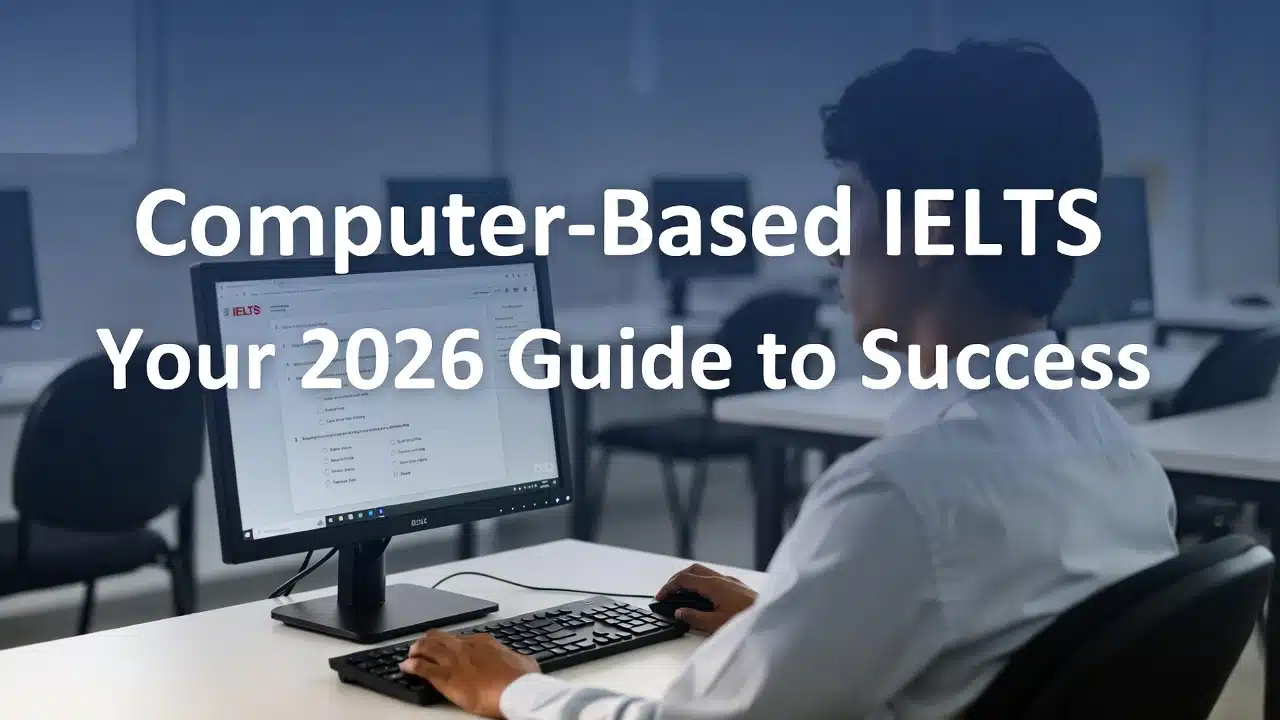
Computer-based IELTS delivers the Listening, Reading, and Writing sections on a computer at an official test center. The Speaking section remains face-to-face with an examiner.
The test content, question types, difficulty, and scoring stay identical to the paper version. In many locations, including some British Council centers, it becomes the main or only option from early 2026.
Offered by both British Council and IDP computer-based IELTS, it provides more frequent slots and faster results. As paper-based phases out in some areas, mastering the digital format is key for 2026 test-takers.

Advantages of Computer-Based IELTS
Choosing computer-based IELTS offers clear benefits that can enhance your experience and performance.
Key advantages include:
- Faster results — Get scores in 1-5 days instead of 13.
- More test dates — Enjoy flexible scheduling, often multiple sessions daily.
- User-friendly features — Use headphones with adjustable volume for Listening, highlight text and copy-paste in Reading, and get an automatic word counter plus easy editing in Writing.
- Quieter environment — Smaller groups mean less distraction.
- Direct answer entry — No transfer time needed (just 2 minutes to check in Listening).
These perks make computer-based IELTS ideal if you’re comfortable with tech and need quick feedback for applications.
Disadvantages of Computer-Based IELTS
While popular, computer based IELTS has some drawbacks to consider.
Common disadvantages include:
- Typing demands → Slow typists may struggle in Writing, though editing is easier.
- Screen fatigue → Staring at a screen for hours can tire eyes more than paper.
- Limited review in Listening → Only 2 minutes to check answers, versus 10 for transferring on paper.
- No physical notes → On-screen highlighting and notes take getting used to.
- Tech issues (rare) → Potential glitches, though centers are well-equipped.
If you prefer handwriting or underlining physically, these factors might make paper-based feel more comfortable—where still available.
Comparison: Computer-Based vs Paper-Based IELTS
Understanding the differences helps you decide, especially during the 2026 transition.
| Aspect | Computer-Based IELTS | Paper-Based IELTS |
|---|---|---|
| Delivery (L, R, W) | On computer (type answers) | On paper (handwrite) |
| Results Time | 1-5 days | 13 days |
| Listening Check Time | 2 minutes | 10 minutes (transfer) |
| Writing Features | Word counter, easy edit/cut-paste | Manual word count, erasing |
| Reading Tools | Highlight, copy-paste | Physical underlining |
| Test Dates | More frequent | Fewer slots |
| Environment | Smaller rooms, headphones | Larger groups |
| Acceptance | Fully accepted worldwide | Fully accepted (phasing out in places) |
Both formats are equally valid, and is computer-based IELTS accepted everywhere? Yes, for study, work, and migration—just like paper-based.
Tips to Excel in Computer-Based IELTS
Success in computer-based IELTS comes from targeted practice. Here are expert tips:
- Familiarize with the interface — Use official free computer-based IELTS practice tests from British Council or IDP.
- Improve typing speed — Practice typing essays to reach 30-40 words per minute.
- Master tools — Learn highlighting, note-taking, and navigation.
- Time management — Use the on-screen timer; practice full timed sections.
- Listening focus — Adjust volume and concentrate—answers go directly in.
- Reading strategy — Highlight keywords and copy for fill-ins to save time.
- Writing proofread — Use edit features, check spelling (no auto-correct).
- Speaking prep — Same as paper—practice fluency face-to-face.
Action step: Start with a free computer-based IELTS practice test to build confidence.
Common Mistakes to Avoid
Many test-takers trip on these errors in computer-based IELTS—learn to dodge them!
- Forgetting to use highlight/copy-paste tools in Reading.
- Typing too slowly or not editing in Writing.
- Panicking over the short Listening check time.
- Ignoring the timer and rushing sections.
- Not practicing on computer format, leading to surprises.
- Poor mouse/keyboard skills causing frustration.
Tip: Complete several computer-based IELTS practice tests free online to spot and fix these early.
Free Practice Resources for Computer-Based IELTS
Build skills with these official and reliable options:
- British Council computer-based IELTS — Free familiarization tests for Listening, Reading, Writing.
- IDP tools — Free computer-based IELTS Reading practice test and full mocks.
- Sites like ieltsonlinetests.com or mini-ielts.com for computer-based IELTS Listening practice test with answers.
- Full free computer-based IELTS practice test on BestMyTest or IELTS Online Tests.
For Writing, try computer-based IELTS Writing practice test sections. Join our Telegram for curated links and updates!
Download Section: Free Resources & Practice
Enhance prep with downloads:
- Official British Council/IDP familiarization tests (free on their sites).
- Computer-based IELTS practice test free PDFs and audios from trusted platforms.
Steps:
- Visit British Council or IDP sites for official tools.
- Download sample questions and interfaces.
- 👉 Join Our Telegram Channel to Download IELTS Academic/General PDF and Audios
🎧 Includes all Listening Audios + Speaking Videos + Answer Explanations + Writing Samples.
Practice consistently—your band score will thank you!
FAQ: Common Questions About Computer-Based IELTS
Q1: What are the main advantages and disadvantages of computer-based IELTS? A: Advantages include faster results and handy tools; disadvantages involve typing needs and screen time. Choose based on your comfort.
Q2: Is computer-based IELTS accepted everywhere? A: Yes, fully for universities, immigration, and professions—same as paper-based.
Q3: Where can I find free computer-based IELTS practice tests? A: British Council and IDP offer official free ones; join Telegram for more links.
Q4: How does British Council computer-based IELTS differ from IDP? A: No difference in test—only center location, slots, or minor facilities vary.
Q5: Any tips for computer-based IELTS Listening practice test with answers? A: Use headphones, practice direct entry, and review with official transcripts.
Q6: Will paper-based IELTS disappear in 2026? A: In some regions yes, but computer-based is widely available and equivalent.
You’re now ready to tackle computer-based IELTS with confidence! Start practicing today, stay consistent, and your target score is within reach. Check IELTSNest.com and totthyo.com for more guides.