Introduction to the IELTS Test
The International English Language Testing System (IELTS) is a widely recognized assessment that measures English language proficiency among non-native speakers. It plays a significant role in global education and immigration, serving as a benchmark for individuals seeking to study or work in English-speaking countries. Administered in more than 140 countries, IELTS has become a critical tool for evaluating language skills, ensuring that candidates possess the requisite abilities to communicate effectively in various academic and professional environments.
IELTS comprises four sections: Listening, Reading, Writing, and Speaking, each designed to evaluate distinct aspects of language competence. Among these, the reading section is particularly vital, as it assesses test-takers’ ability to comprehend and interpret written English. The reading format varies depending on whether candidates are taking the Academic or General Training version of the test. While both formats involve reading passages and answering related questions, the Academic test focuses more on sophisticated texts that are representative of post-secondary level study.
Assessment of IELTS scores is executed using a band scale from 1 to 9, with each band corresponding to specific competency levels. For individuals aiming to pursue higher education or enhance career prospects, achieving a minimum band score is often crucial. For example, universities may require a score of 6.5 or higher for admission purposes, highlighting the importance of thoroughly preparing for the reading section. The evaluation criteria for reading responses include accuracy, comprehension, and the ability to organize and convey information effectively.
👉 Join Our Telegram Channel to Download the Cambridge IELTS 20 Academic PDF and Audios
🎧 Includes all Listening Audios + Speaking Videos + Answer Explanations + Writing Samples.
Thus, understanding the structure and expectations of the IELTS, particularly the reading component, is essential for non-native speakers who aspire to meet the linguistic demands of academic and professional success. Familiarizing oneself with test formats and types of questions can significantly improve candidates’ chances of achieving their desired scores.
Understanding the IELTS Reading Section
The IELTS Reading section is an essential component of the International English Language Testing System, designed to assess an individual’s reading skills in a standardized manner. This section comprises three distinct passages derived from a variety of sources, including books, newspapers, magazines, and academic texts. The diverse nature of these materials aims to ensure that candidates encounter a range of vocabulary and writing styles, thereby challenging their comprehension abilities.
In total, candidates are allocated 60 minutes to complete the reading section. This time is split among the three passages, each accompanied by a series of questions. The types of questions may vary significantly, encompassing multiple-choice questions, true/false/not given statements, matching headings, and short answer questions. Each type examines different facets of reading comprehension, from the ability to infer information and identify specific details to selecting main ideas and understanding authors’ perspectives.
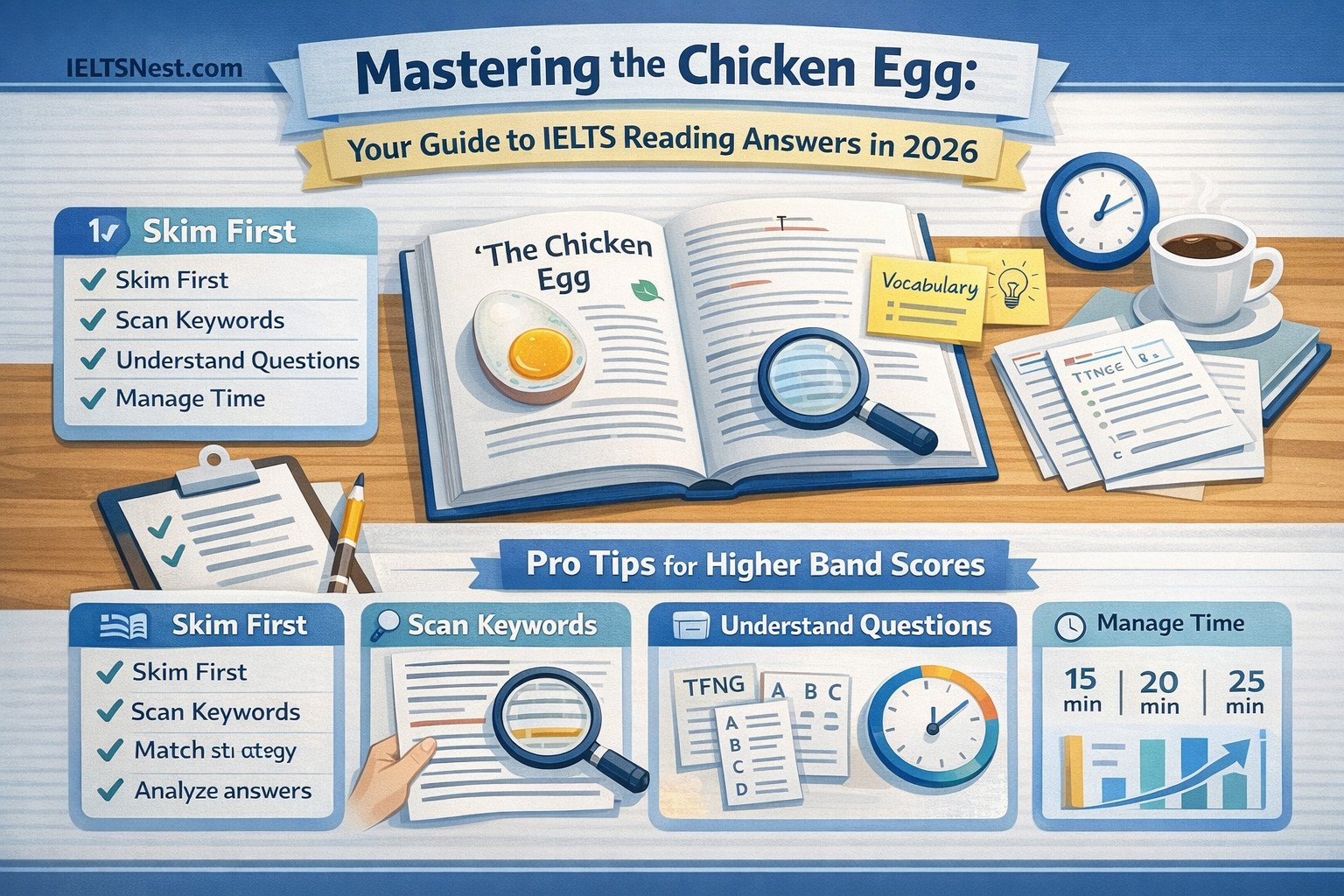
Effective time management is a crucial strategy for success in the IELTS Reading section. Being mindful of the allotted time for each passage can help candidates avoid unnecessary delays. A recommended approach is to read the questions before delving into the passage, as this tactic helps candidates locate relevant information more swiftly. Additionally, utilizing skimming and scanning techniques can enhance efficiency; skimming addresses the overall meaning and main ideas, while scanning efficiently identifies specific information.
To maximize performance in the IELTS Reading section, candidates should practice under timed conditions, familiarizing themselves with the question formats and types of texts they may encounter. This preparation not only builds confidence but also sharpens reading techniques needed for success in this assessment.
The Chicken Egg Analogy: Understanding IELTS Reading Preparation
The chicken egg serves as a fascinating analogy when exploring the intricacies of IELTS reading preparation. This concept emphasizes that, like cracking open an egg to reveal its contents, learners must delve deeply into texts to uncover essential ideas and details that inform their understanding of the material. Just as one must pay attention to the various components within an egg – such as the yolk, the white, and the shell – IELTS candidates must identify key elements within reading passages to succeed in their assessments.
In the realm of IELTS reading, clarity and comprehension are paramount. By using the chicken egg analogy, learners can appreciate the layered complexity of reading materials. Each text comprises multiple layers of meaning, much like layers within an egg. The outer layer may present straightforward information, while deeper layers might contain nuanced arguments, opinion, or extrapolated insights. This method encourages students to cultivate a mindset focused on exploration and inquiry, which aligns perfectly with the critical thinking skills tested in the IELTS reading section.
Moreover, embracing this analogy helps learners develop strategies for effectively tackling complex texts. Just as one needs the right approach to extract the desired nourishment from an egg, students must utilize specific techniques, such as skimming, scanning, and note-taking. These strategies empower them to identify key ideas and structure their answers more effectively, ultimately facilitating better performance in the exam.
In conclusion, the chicken egg analogy serves as a valuable tool for understanding IELTS reading preparation. By encouraging students to engage critically with texts and develop an analytical mindset, this approach not only enhances comprehension but also prepares learners for the rigors of the IELTS examination. By dissecting texts like they would a chicken egg, they can gain the insights needed to excel.
2026 Updates: Changes in IELTS Reading Practices
The IELTS Reading section is set to undergo several important updates in 2026. These changes aim to enhance the testing experience and address the evolving needs of candidates. One of the most notable modifications will be the introduction of new question formats that focus on assessing comprehension skills more effectively. For instance, candidates can expect a greater emphasis on tasks that require critical analysis and synthesis of information. This change seeks to ensure that the assessment is reflective of real-world academic challenges.
In addition to the new question types, scoring criteria will also see a refinement. The assessment of reading comprehension will now incorporate a broader range of competencies, including the ability to interpret tone, purpose, and implied meanings within texts. This adjustment is designed to provide a more nuanced evaluation of a candidate’s reading skills, moving beyond mere retention of facts. It will challenge test-takers to demonstrate a deeper understanding of diverse materials.
Moreover, the study materials available for candidates will be updated to include more contemporary texts and resources. This inclusion will facilitate better alignment with what is encountered in an actual academic setting, ensuring that candidates are exposed to a variety of documents that reflect the current academic discourse. Publishers and educators will also adapt their preparation resources to reflect these changes, offering tailored practice materials that familiarize candidates with the new formats and expectations.
It is crucial for IELTS candidates to stay informed about these updates and utilize the newly available resources to prepare effectively. Keeping abreast of such changes will enhance their capacity to tackle the revised formats and ultimately improve their performance on the IELTS Reading test in 2026.
Effective Strategies for IELTS Reading Preparation
Preparing for the IELTS reading section requires a multifaceted approach that includes enhancing reading speed, comprehension, and familiarization with various text types. One of the fundamental strategies is to read regularly. This can involve a diverse range of materials—news articles, essays, and academic journals. Regular reading not only improves speed but also cultivates a deeper understanding of different writing styles and vocabularies that are commonly present in the IELTS exam.
Another crucial component is time management. Familiarizing oneself with the test format, including the types of questions such as matching headings or completing sentences, can significantly impact performance. Practicing under timed conditions allows candidates to become accustomed to the pace required during the actual test. It is beneficial to use practice tests that replicate the IELTS reading section’s structure.
Improving comprehension is essential for success in the IELTS reading section. One effective method for achieving this is through annotating texts. As you read, make notes or highlight key points. This not only reinforces understanding but also aids retention for later review. Additionally, summarizing paragraphs in your own words can enhance comprehension and ensure that you grasp the main ideas presented by the author.
To conclude, engaging with a variety of texts, practicing regularly, and employing effective reading strategies can markedly improve one’s performance in the IELTS reading section. This preparation lays a strong foundation that makes navigating the complexities of the IELTS reading tasks more manageable.
Common Mistakes to Avoid in IELTS Reading
The IELTS reading section poses unique challenges for candidates, leading to several common mistakes that can hinder their performance. Understanding these pitfalls is crucial for effective preparation and success. One prevalent error is misreading or misunderstanding the questions. Candidates often rush through the questions, failing to grasp what is being asked. To combat this, it is essential to take a moment to carefully read the questions and identify key terms before searching for answers within the passage.
Another frequent issue is neglecting to manage time effectively. The reading section is time-sensitive, and many candidates spend too long on certain questions, leaving insufficient time for others. To avoid this mistake, it is advisable to practice time management strategies during mock tests. Allocating a specific time for each passage and sticking to it can help maintain a steady pace.
Additionally, many test-takers struggle with vocabulary, often overlooking synonyms or paraphrased information in the text. This tendency leads to confusion when the answer does not match the word-for-word phrasing found in the passage. Developing a strong vocabulary and practicing paraphrasing can significantly improve comprehension and answer selection.
In a similar vein, candidates frequently fall into the trap of choosing answers based solely on their assumptions or prior knowledge rather than the evidence presented in the text. IELTS reading tasks are designed to assess comprehension of the material provided. Therefore, it is critical to base answers on the text itself, ensuring objective reasoning in response selection.
Lastly, insufficient practice can result in a lack of familiarity with the test format. Regular practice with sample papers can help candidates identify these mistakes and build confidence. Understanding the structure of the reading section, and experiencing the types of questions that may arise, will enhance overall performance.
Resources for Practicing IELTS Reading Skills
To excel in the IELTS reading section, leveraging quality resources is essential. A variety of materials is available that cater to diverse learning styles and ensure comprehensive coverage of the skills required for the test. One recommended resource is the “Official IELTS Practice Materials”, which include a range of practice tests and answer sheets that reflect the actual exam format. Another effective avenue is the use of IELTS preparation books, such as those authored by Cambridge University Press, which often provide invaluable insights into question types and answer strategies.
Online platforms also play a crucial role in preparing for the IELTS. Websites like IELTS Liz and IELTS Totthyo offer free articles, tips, and sample questions that can greatly help in understanding the reading section’s requirements. Employing these resources not only enhances reading skills but also familiarizes candidates with the various passages and question formats they will encounter on the exam. Moreover, utilizing platforms that offer interactive reading exercises can elevate comprehension skills through immediate feedback.
As the IELTS undergoes continuous updates, particularly with the 2026 version introducing changes in question styles and types of readings, it is imperative to practice with the most current materials. Using outdated resources may hinder preparation, as they might not accurately represent the test. Many candidates find success with practice tests available from the British Council and other reputable sources, reflecting the latest examination structure. In this fast-evolving landscape, commitment to utilizing high-quality and up-to-date resources ensures effective preparation for the IELTS reading section.
Real-life Testimonials: Success Stories in IELTS Reading
Many IELTS candidates have shared their inspiring journeys as they successfully navigated the reading section, providing valuable insights into their study methods and strategies. One such candidate, Sarah, achieved an impressive band score of 8.0 in her reading test. Sarah attributed her success to consistent practice and a thorough understanding of the test format. She emphasized the importance of simulating real exam conditions while taking practice tests, which helped her manage her time effectively and build familiarity with the types of questions commonly asked.
Another successful candidate, Tom, spoke about the critical role of reading diverse materials during his preparation. Tom regularly read newspapers, academic journals, and fiction, which not only honed his reading skills but also improved his vocabulary. He noted that engaging with a variety of texts helps develop better comprehension and the ability to quickly identify key information, which is essential for performing well on the IELTS reading section.
Both candidates highlighted the importance of reviewing mistakes made in practice tests. Reflecting on these errors equips future test-takers with a deeper understanding of their weaknesses and helps them to refine their strategies. Sarah recommended using high-quality IELTS preparation books as well as online resources that simulate the reading section. Tom, on the other hand, suggested forming study groups with fellow candidates. Such collaborative efforts can provide motivation, accountability, and different perspectives on tackling complex reading passages.
These testimonials serve as a reminder that success on the IELTS reading section is achievable with dedication and the right strategies. By integrating practical study methods and learning from the experiences of others, future candidates can enhance their chances of excelling in this essential part of the IELTS exam. Drawing inspiration from success stories can create a roadmap for their own preparation journey.
Conclusion and Call to Action
Throughout this guide, we have explored the essential strategies to enhance your ability to answer IELTS reading questions effectively in 2026. Understanding the structure of the test and familiarizing yourself with the types of questions are foundational elements to achieve success. Engaging in regular practice with authentic IELTS reading materials can significantly improve your comprehension skills and speed, thereby increasing your chances of scoring well on the exam.
Moreover, utilizing the various resources mentioned, such as practice tests and study groups, can provide valuable insights and support. Implementing the skimming and scanning techniques highlighted earlier can also assist in quickly identifying key information, allowing for more efficient use of your time during the test.
We encourage you to put these strategies into action, as the path to mastering IELTS reading lies in consistent practice and dedication. Make a study schedule that prioritizes reading practice, and consider tracking your progress to identify areas that require further attention. By committing to this learning process, you not only equip yourself for the IELTS reading section but also develop essential reading skills that will benefit you in various academic and professional contexts.
In conclusion, the journey towards a successful IELTS reading score is paved with diligent preparation and informed practice. Take the first step today by implementing these insights and resources in your study routine. Remember, every effort you make today will contribute to your success in the test tomorrow. Good luck!